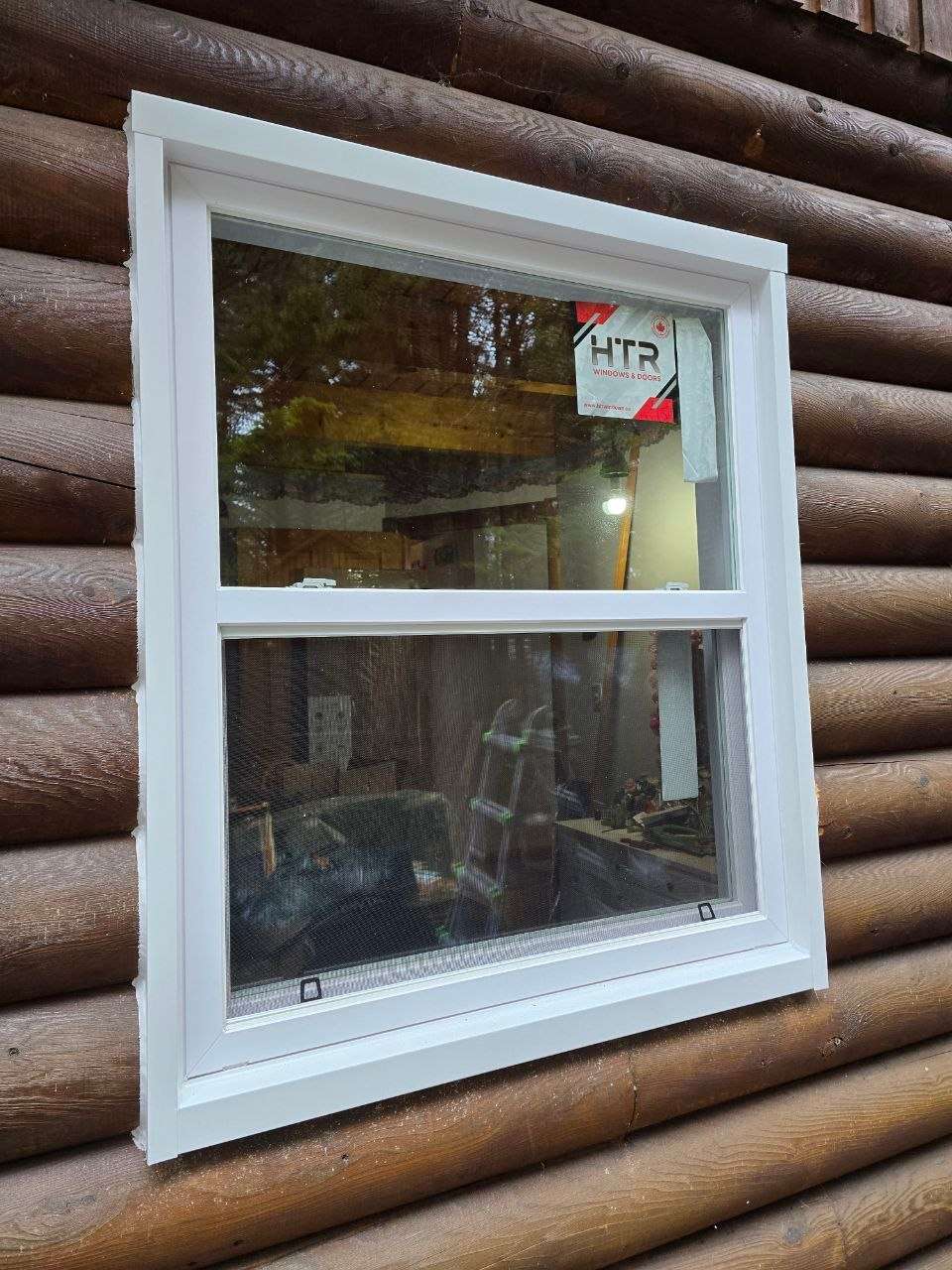
Low-E Glass Explained: The Invisible Coating That Keeps Your Heat Inside
Low-E glass looks like ordinary clear glass, but it works like the shiny foil emergency blanket marathon runners wear: it reflects heat back where it came from. A plain-English guide before you choose a coating.
When you get a window quote, you will probably see a line like "Low-E" or "LoĒ²-272" next to the glass. It sounds technical. The idea behind it is simple.
The foil blanket trick
You have probably seen marathon runners or hikers wrapped in a thin, shiny foil blanket. It is not thick, but it keeps them warm, because the shiny surface reflects their body heat back to them instead of letting it escape.
Low-E glass does the same thing — with a layer so thin you cannot see it.
"Low-E" stands for low emissivity. In plain words: the glass is coated with microscopic layers of metal (usually silver) that bounce heat back toward where it came from, while still letting light through.
- In winter, it reflects the heat from your furnace and your room back inside.
- In summer, depending on the coating, it reflects a share of the sun's heat back outside.
Why ordinary glass loses so much heat
Plain glass lets heat pass through easily. Stand next to an old window on a cold night and you can feel it — the glass itself is cold, and so is the air near it. That cold surface is also where condensation forms. See why your windows sweat in winter.
A Low-E coating keeps the inside glass surface noticeably warmer. Cardinal's published figures for a standard double-pane unit show the room-side glass running around 13°C with a Low-E coating versus about 7°C with plain clear glass on the same winter test night. That difference is what you feel on the couch next to the window.
Not all Low-E glass is the same
This is where the numbers come in. Cardinal Glass Industries, one of the largest makers of coated glass in North America, makes several coatings. The three you will see most:
| Coating | Nickname | What it does best |
|---|---|---|
| LoĒ-180 | The sun-catcher | Lets in the most winter sun and daylight while keeping heat in |
| LoĒ²-272 | The all-rounder | Balances winter warmth and summer heat control |
| LoĒ³-366 | The heat blocker | Strongest summer heat and fade control, very good insulation |
The number of silver layers is in the name: LoĒ-180 has one, LoĒ²-272 has two, LoĒ³-366 has three. More layers generally means more control over the sun's heat — and slightly less daylight.
Three words on the label
- U-factor — how fast heat escapes. Lower is better for winter comfort.
- SHGC (solar heat gain coefficient) — how much of the sun's heat gets in. Lower keeps rooms cooler in summer; higher lets in free winter warmth.
- VT (visible transmittance) — how much daylight gets through. Higher is brighter.
No single coating wins all three. Picking one is about what each room needs. Our side-by-side guide helps: LoĒ-180 vs 272 vs 366.
And the outside of the glass?
Low-E works on the inside of the glass sandwich. On the outer surface, Cardinal offers a separate coating called Neat glass that helps windows stay cleaner longer.
What it costs
Coating upgrades are a small part of a window project. On Financeit's 9.99% / 60-month promotional plan, every $1,000 of upgrades is roughly $21 a month (on approved credit, before any lender fees).
The Weather Seal windows we install are available with all three Cardinal coatings — LoĒ-180, LoĒ²-272 and LoĒ³-366 — plus Neat glass. At your free assessment we will show you samples and recommend one for each side of your house. Call +1 (778) 361-2515 — live agent, Mon–Fri, 9am–5pm Calgary time.
Related articles
LoĒ-180 vs LoĒ²-272 vs LoĒ³-366: Which Glass for Each Side of Your House?
September 28, 2026
Cardinal LoĒ-180 Glass (Low-E 180): The Sun-Catcher for Cold Winters
September 28, 2026
Cardinal LoĒ²-272 Glass (Low-E 272): The All-Season Choice
September 28, 2026
Cardinal LoĒ³-366 Glass (Low-E 366): Maximum Heat and Fade Control
September 28, 2026